November 1, 2008
Revised November 4, 2025
.
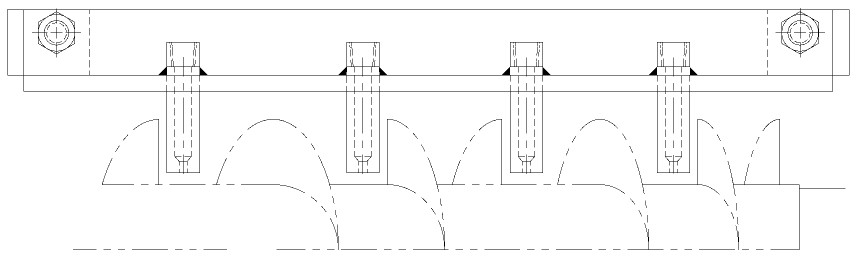
Almost all Vincent presses use screws with the interrupted flight design. Built with anything from three to seven stages of compression, there is a gap in the screw flighting for each stage of compression. Resistor teeth, fixed from the outside of the screen, project through the screen into these gaps. The purpose of the resistor teeth is to prevent co-rotation of the material in the press. In addition, they cause agitation within the press, which stirs wet material against the screen of the press.
These resistor teeth can be drilled for yet another function. By drilling holes the length of the teeth, it is possible to pump fluid from the outside of the press into the material being pressed.
The most common application is where it is desired to wash material while it is being pressed. Hot water can be pumped into a press that is pressing things like coconut meat and pineapple skins. This results in a higher recovery of flavors and dissolved solids.
Sometimes solvent, like alcohol, is pumped through the resistor teeth. This is done with the press in operation. It works well where the solvent is used to extract solubles (like sugar) in a material.
Another application is to pump CIP water through the teeth. This allows the press to be flushed internally with water or caustic solution during shut-down periods. In some cases this arrangement can eliminate the need to disassemble the press for cleaning purposes.
Still another application is to inject steam into the material which is being pressed while the press is in operation. The blanching action that occurs can result in significant additional moisture removal by the screw press. Pressing News #129 of July, 2002 tells how an additional four percentage points of moisture removal were achieved in citrus waste by injecting steam.
Crown Iron Works did some work with a lab press where the possibility of injecting super critical carbon dioxide was considered. This, too, is a solvent extraction application.
The cost of drilling resistor teeth and fitting them with a pipe coupling is so slight that it is provided at no charge when the customer has a need for it.
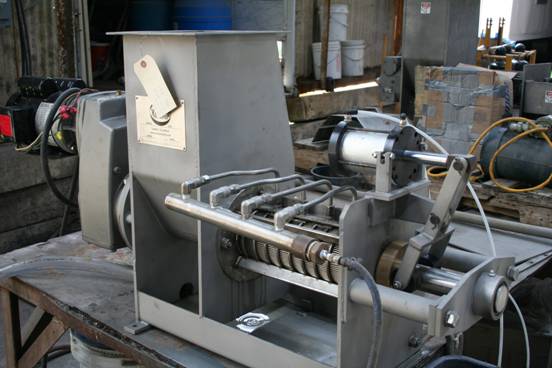
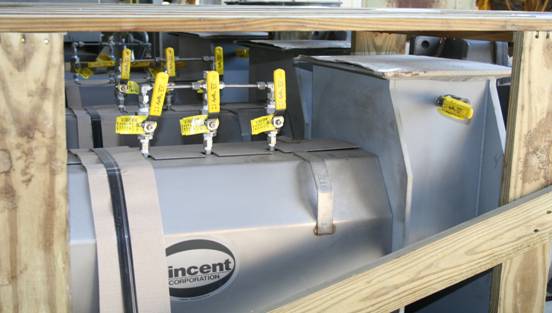
The photos show small presses fitted for fluid injection.