
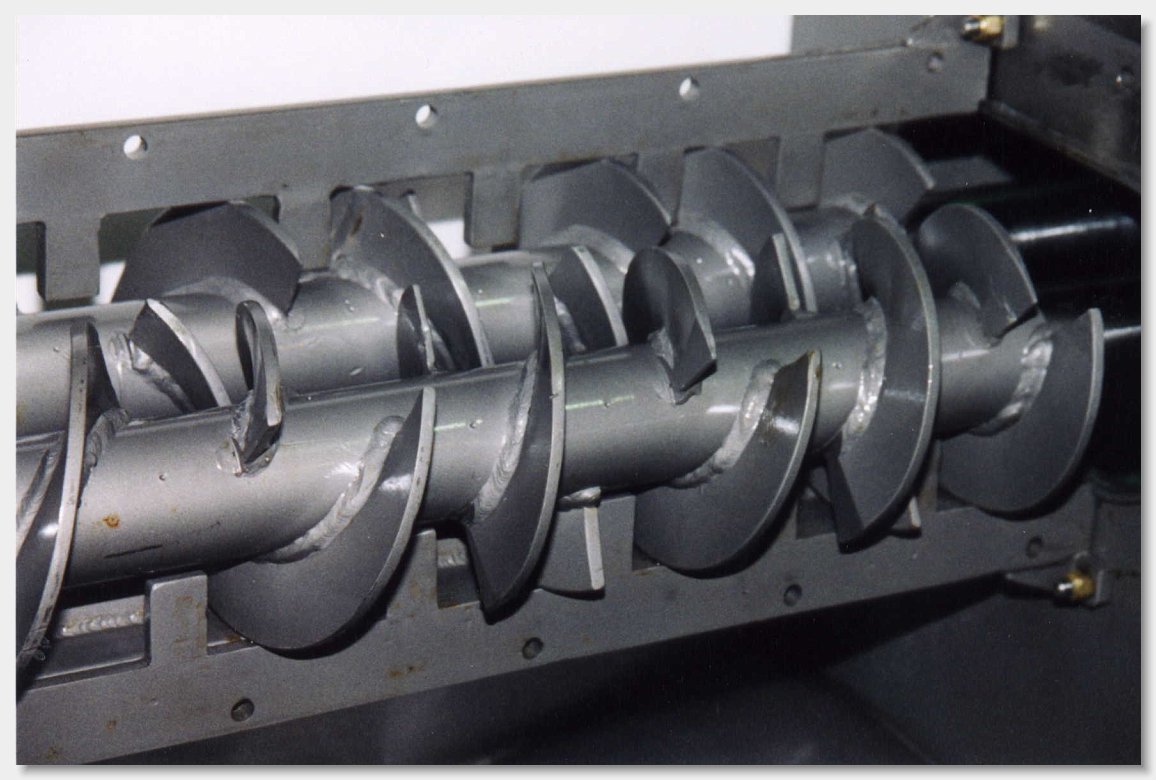
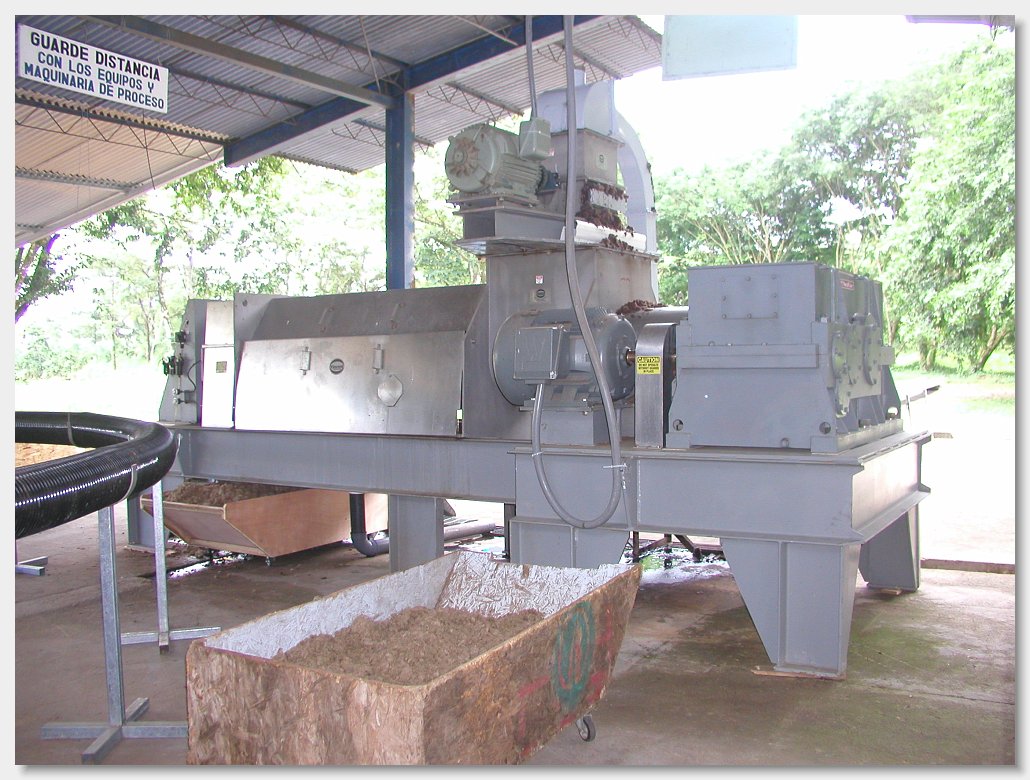
The Twin Screw Press or TSP is a machine in which two screws of progressively reducing pitch rotate inside a screen surface. Material entering the hopper is subjected to gradually increasing pressure as it moves toward the exit end of the press, forcing the liquid phase to extrude through the screen. High capacity continuous dewatering is possible with slippery materials such as spent grain, fruits and vegetables, citrus waste, fish, sugar beet pulp, and shrimp waste.
Dewatering of chitin and chitosan has proven to be an excellent application because of the positive feeding characteristic of the press.
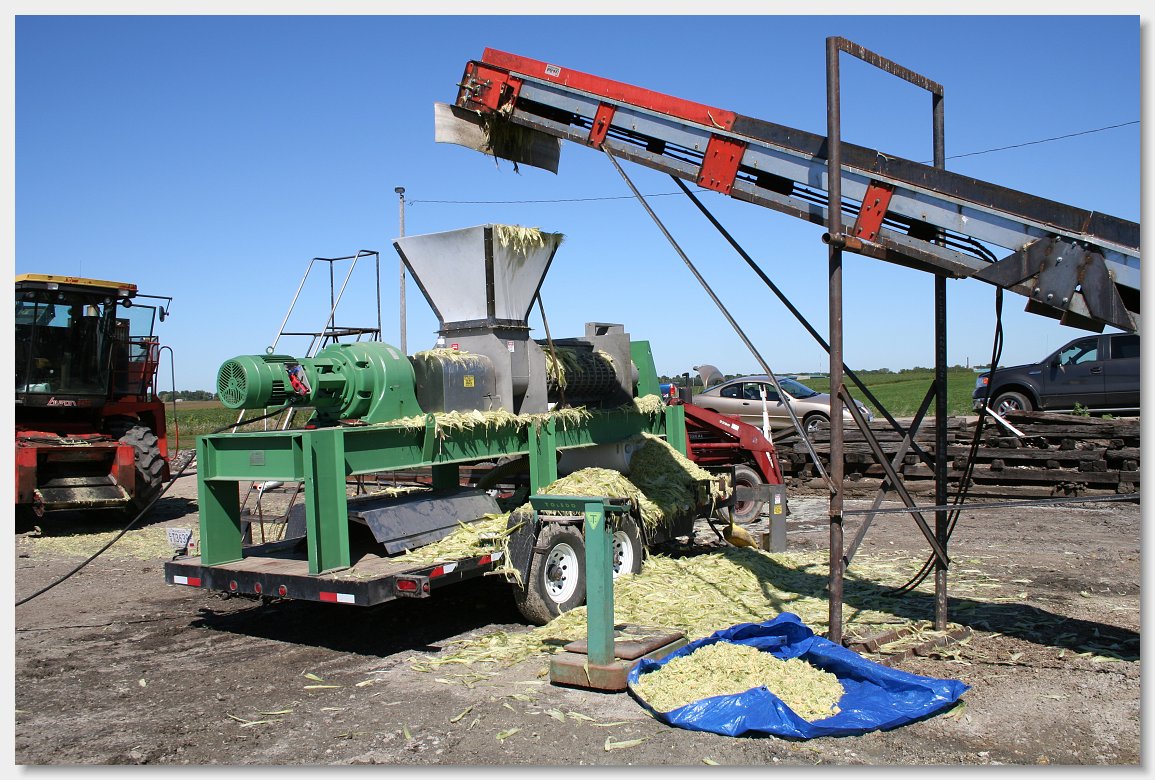
With corn silage (husk and cob) from a sweet corn cannery, the shredder (chopper) is no longer necessary.
All Twin Screw Presses require a variable speed drive (VFD), because the capacity of these presses is very sensitive to changes in speed.
Twin Screw Press Performance
Outstanding Characteristics of the Twin Screw Press include very positive feeding, low horsepower, and automatic adjustment for changes in feed rate to the press. Seven stages of compression in overlapping screws result in very strong dewatering and feeding action. A discharge cone actuated by air cylinders allows consistent performance over a wide range of flow rates and consistencies. Slicing action of the interrupted flight screws results in reduced power consumption. The TSP is available in sizes 6” to 30” View this chart for a guideline on capacity and performance.
| Model | Maximum Inbound Capacity* TON/HR |
Typical Screw RPM |
Screw Horsepower |
Length Feet |
Width Feet |
Height Feet |
Weight Lbs |
| TSP-6 | 1-2 | 30 | 5-10 | 10 | 2 | 2.5 | 2,400 |
| TSP-10 | 5-10 | 20 | 10-20 | 15.5 | 3 | 3 | 5,200 |
| TSP-12 | 10-20 | 16 | 20-30 | 18 | 3.5 | 4 | 8,800 |
| TSP-16 | 15-35 | 13 | 40-60 | 19.5 | 6.7 | 5 | 28,000 |
| TSP-24 | 40-80 | 9 | 75-150 | 23 | 8 | 6 | 45,000 |
* Subject to on-site testing
Key Features


Applications of the Twin Screw Press
The Twin Screw Press is well suited to many traditional markets
Food & Agricultural Processing
- Fruits and vegetables
- Citrus waste
- Limed and washed citrus peel
- Sugar beet pulp
- Corn Silage (husk and cob)
- Alfalfa
- Spent distillers grain
- Spent Coffee
- Extracting starch from raw potatoes
- Cream of coconut
- Pineapple juice
Seafood & Animal Processing
- Fish waste
- Shrimp waste
- Shrimp shells
- Chitin and chitosan
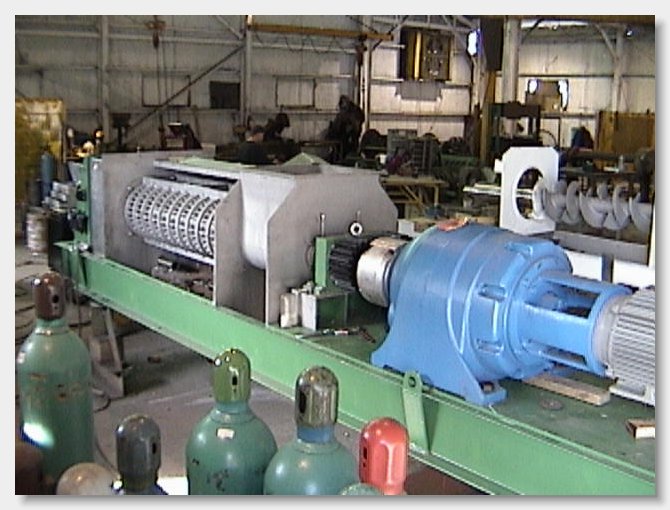
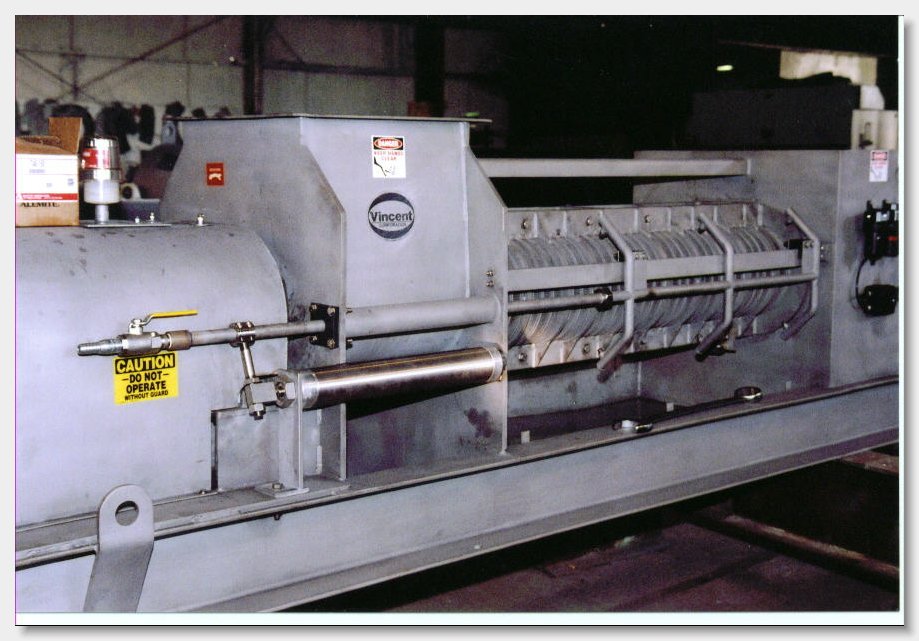
TSP-12 in Shop
A New Class of Screw Press Technology
Screw presses are a well-established technology, with decades of development resulting in numerous patented improvements to conventional designs. Many of these inventions build upon existing machines by introducing relatively limited changes or enhancements.
Vincent’s patented twin screw press takes a different approach. The invention goes beyond an incremental modification of conventional screw press technology and establishes a distinct class of screw press. Its patented configuration represents a significant departure from traditional single-screw designs.
Custom Configurations for Different Applications
Twin Screw Presses can be configured to meet the specific requirements of the material being processed and the desired results. Customization options include screw geometry and compression, screen configuration, resistor teeth, inlet hoppers, discharge cones, fluid injection, drive and speed control, and automated controls. Equipment layout can also be adapted to integrate the press with existing conveying and processing systems.
This application-specific approach allows the Twin Screw Press to be configured for a wide range of dewatering and separation applications.
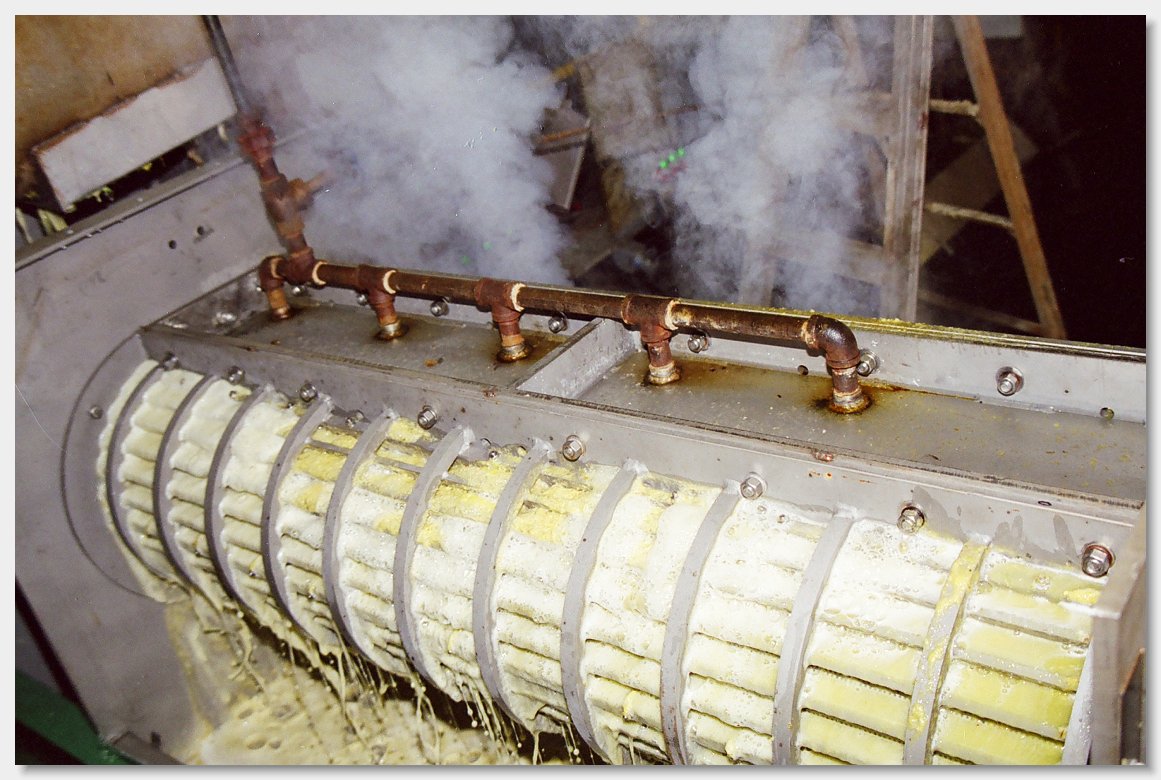
Twin Screw Press Rentals
Not every dewatering project requires the immediate purchase of a Twin Screw Press. Vincent offers Twin Screw Presses for rental, providing a practical way to evaluate the technology, address temporary processing requirements, or increase dewatering capacity without a long-term equipment commitment.
Rental equipment can be used for application testing, pilot projects, seasonal processing, temporary capacity, or short-term production needs. Renting can also provide an opportunity to evaluate Twin Screw Press performance with your material before making a capital investment.
Need a Twin Screw Press for a temporary application?
American Engineering, Global Applications
Vincent Twin Screw Presses are designed and manufactured in the United States and engineered for the demands of real-world processing applications.
With TSP installations serving customers around the world, Vincent combines American manufacturing with decades of screw press experience and application-specific engineering. The result is proven dewatering equipment designed to perform reliably across a wide range of materials and processing environments.
FAQ
How much does a Twin Screw Press Cost?
In financial terms, it is possible to guarantee a machine with double the capacity of a single screw press, but at less cost than two single screw presses of the same diameter.
When should I use a Twin Screw Press instead of other dewatering screws?
The overlapping screws provide positive feeding and strong material movement while also creating additional agitation and compression within the press. Contact us with your application details, and we’ll help you find the right screw press solution.
What materials can a Twin Screw Press handle?
Twin Screw Presses have been used for a wide variety of food, agricultural, seafood, and industrial materials, including fruits and vegetables, citrus waste, fish waste, spent grain, shrimp waste, sugar beet pulp, and fibrous materials.
If you don’t see your material listed on our website, contact us and we’ll help evaluate your application. In many cases, we can test your material in-house and provide video results to help you understand the expected performance. When sending material to our facility isn’t practical, rental units are available so you can test the Twin Screw Press at your own location.