Filtering Waste Water, Press Liquor, and more
Featuring fine filtration of low consistency, high gpm throughputs, the Fiber Filter is a unique machine. It operates continuously with a fabric filter that is vibrated clean by the process flow, requiring only occasional back-flush cycles.
Liquid flows with fiber contents ranging from 0.3% to 1.5% are thickened to a range of 4% to 14% solids with the Fiber Filter. The filtrate liquid is remarkably clear. The Fiber Filter can replace equipment ranging from pre-thickening screens to centrifuges. Fiber Filters can be used both to thicken flow ahead of a screw press and to remove fiber from press liquor.
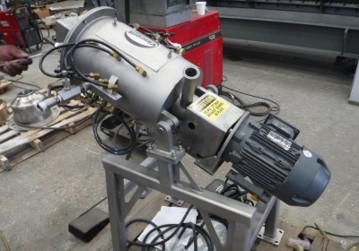
FF-3
Our smallest Fiber Filter, the FF-3 is perfect for lab testing and robust enough to run continuously in a production environment.
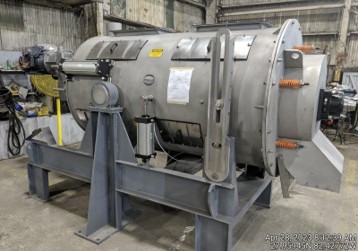
FF-30
Our largest Fiber Filter, the FF-30 is capable of filtering 1,500 gpm.
How it Works
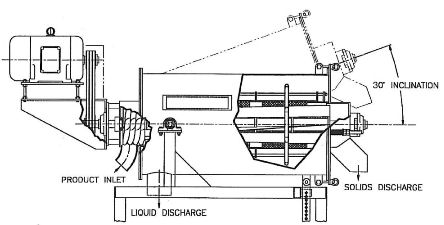
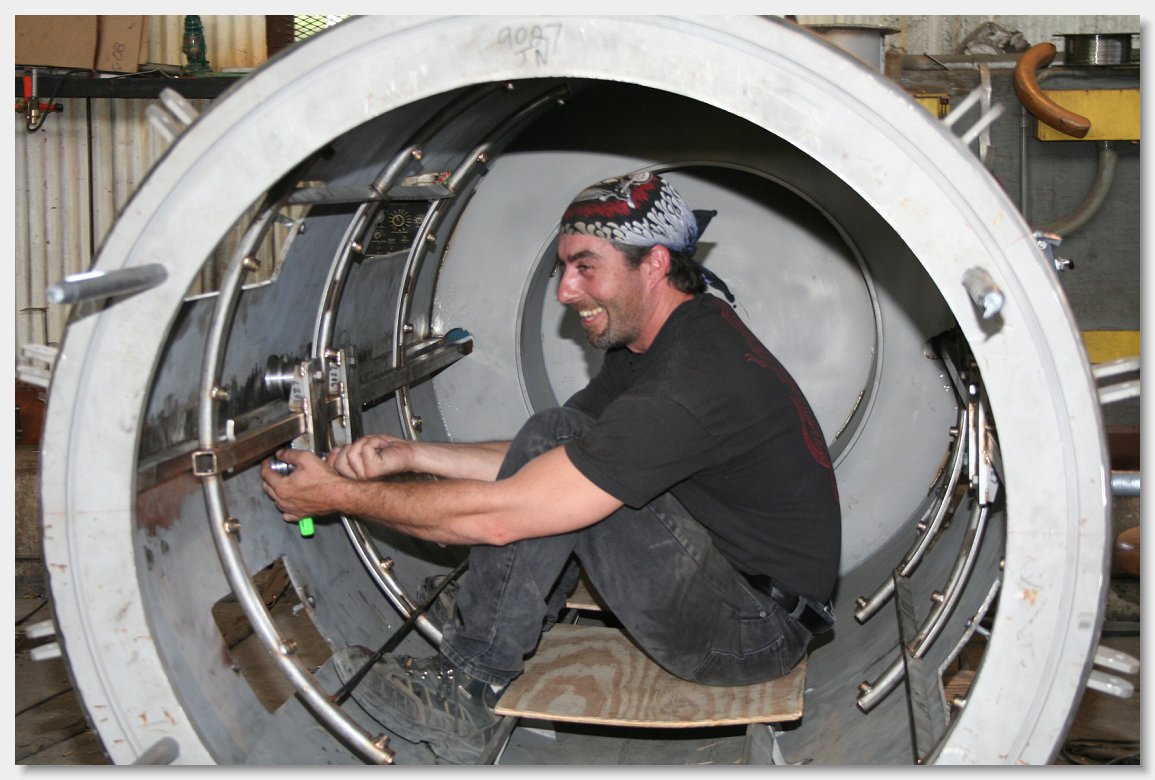
The Fiber Filter uses a unique combination of mechanical action, fabric tension, and high-frequency vibration to separate solids from liquids while minimizing screen blinding.
1. Filtration Begins
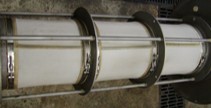
Incoming liquid enters a cylindrical filter screen made from a woven polymer fabric. Available filter fabrics range from 25 microns (0.001″) to 300 microns (0.012″), allowing the Fiber Filter to be matched to the filtration requirements of different applications.
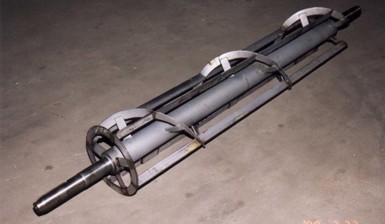
Inside the filter sleeve, a rotating paddle impeller creates a powerful whirling and pulsing action that moves the liquid against the fabric. The liquid passes through the fabric while the solids are retained inside the machine.
2. High-Frequency Vibration Helps Prevent Blinding
One of the biggest challenges with fine filtration is keeping the filter surface from becoming clogged with solids. The Fiber Filter addresses this problem through its unique vibrating filter sleeve design.
The woven fabric is held under tension by a pair of springs. As the high-speed rotor generates pulses in the liquid, these pulses cause the fabric to vibrate at high frequency. This continuous vibration helps prevent solids from blinding the fabric, allowing the machine to maintain effective filtration.
3. Continuous Solids Removal
The rotating impeller also features ribbon flights that move the separated solids toward the sludge discharge end of the machine. Meanwhile, the pulsing action continues to drive filtered liquid through the fabric.
This combination of filtration and solids movement allows the Fiber Filter to continuously separate solids from the liquid stream.
4. Adjustable for Your Application
The filter fabric tension can be adjusted externally, making operation easier and improving sanitation. The machine’s angle of inclination can also be adjusted to optimize flow rate and the concentration of discharged solids.
5. Maintaining Peak Performance
Depending on the application and material being processed, periodic backflushing may be needed to maintain peak throughput capacity. Every Fiber Filter includes a wash nozzle manifold that can use water or filtrate for cleaning, along with a booster pump and control panel.
The result is a versatile filtration system designed to deliver fine separation, resist screen blinding, and provide reliable continuous operation.
Key Features



Adjustments can be made while in operation
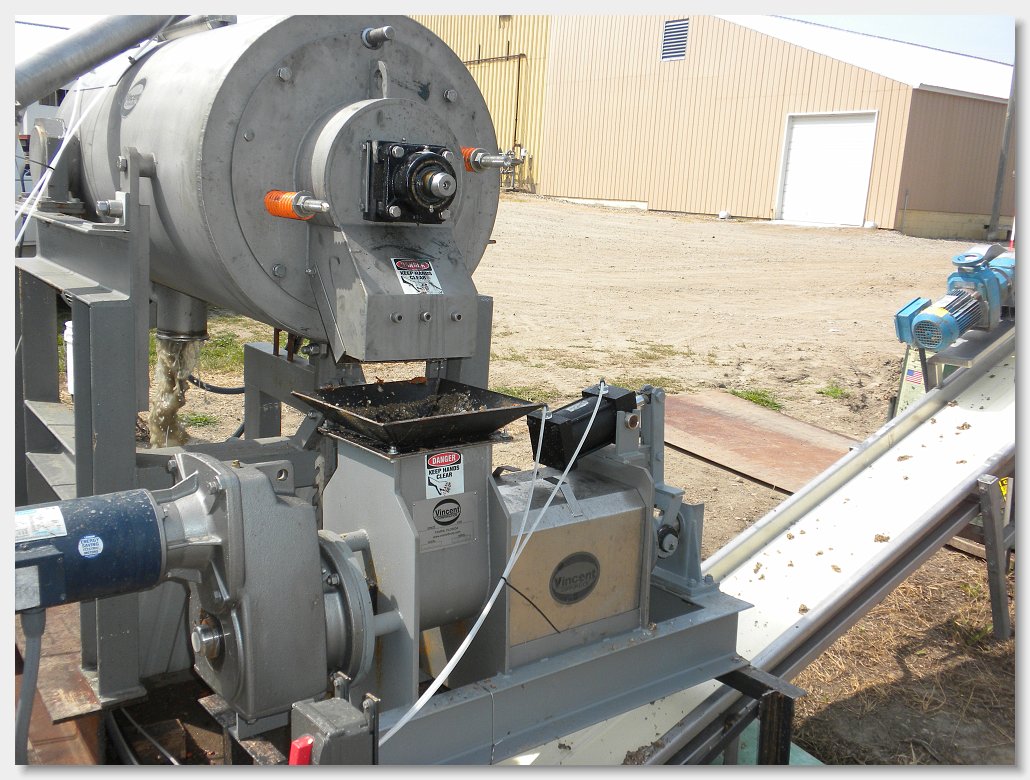
External Fabric Tensioning is an important innovation in the Fiber Filter. The springs that hold the fabric sleeves tight are tensioned at the discharge of the machine. This allows adjustment of the fabric tension with the machine in operation, an important operator convenience. Also, it eliminates springs, turnbuckles and threaded rod from the inside. This is important where the application involves products for human consumption because the machine becomes much more sanitary.
Improve Filtration Performance Without Screen Blinding
Are clogged screens, frequent cleaning, or inadequate filtration limiting your process performance?
The Fiber Filter offers an effective solution for applications where traditional static and rotary drum screens struggle with blinding or fail to achieve the desired filtration results.
While conventional screens are economical to purchase and operate, they can become costly in applications where blinding reduces performance and requires ongoing attention. The Fiber Filter’s non-blinding design helps maintain consistent operation while delivering finer filtration than traditional screening methods.
The result is an opportunity to improve filtration quality, reduce interruptions, and get more reliable performance from your process.
Fiber Filter Applications
-
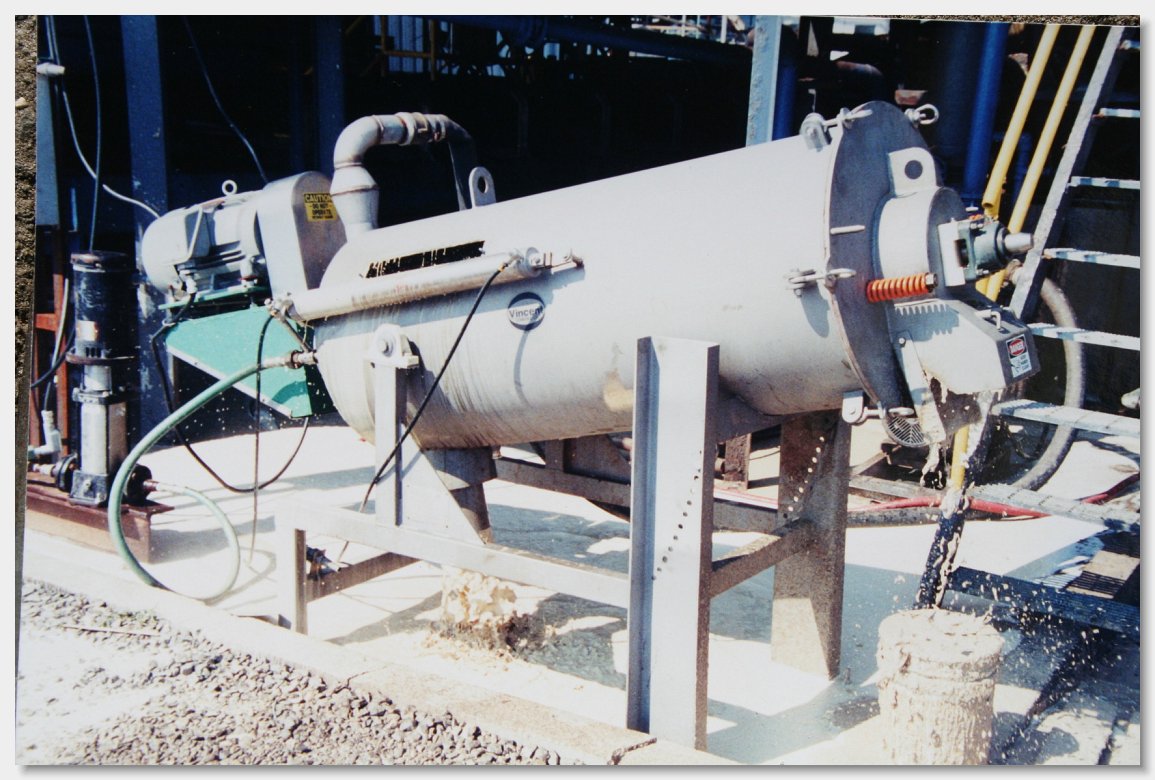
Cleaning press liquor from a screw press.
-
Filtering waste water ahead of a treatment plant at vegetable, meat and fish processors.
-
Concentrating a dilute flow of suspended solids so that the solids can be further dewatered in a screw press.
-
Filtering a flow ahead of an evaporator so as to reduce evaporator fouling and to improve heat transfer efficiency.
-
Removing water from spent grain at breweries, distilleries, and ethanol plants.
-
Finishing fruit juices.
-
Thickening good fiber by filtering out the ink, ash (clay) and water in a paper recycling operation.
-
Removing fiber from black liquor ahead of the evaporators in a virgin fiber paper mill.
-
Maximizing Capture Rate in pineapple juice and paper mills.
-
Shower Water Filtration in paper mills.
Fiber Filter Application Spotlight
- Cannery Wastewater
- Canola & Soybean Protein Concentrate
- Juice Finishing
- Nutraceuticals
- Starchy Vegetable Wastewater
- Pectin Recovery
- Oat Bran
- Chili Peppers
- Deinking
- Meat Flavor Extracts
- Pineapple Mill Juice
- Corn Ethanol Production
- Algae and Seaweed Disposal
-
Example Capacity Capabilities
Vincent Fiber Filters are available in four models, with nominal processing capacities ranging from 5 to 1,500 gallons per minute (GPM).
| Model | HP | Capacity (gpm) | Weight (lbs) | Dimensions (ft) L x W x H |
| FF-3 | 1.5 | 5 – 20 | 350 | 4 x 2 x 3 |
| FF-6 | 3 | 25 – 150 | 700 | 6 x 2 x 4 |
| FF-12 | 10 | 100 – 500 | 1,600 | 8 x 3 x 5 |
| FF-30 | 30 | 300 – 1500 | 2,400 | 10 x 4 x 6 |
Actual capacity depends on several factors, including the incoming flow rate, suspended solids concentration, material characteristics, and desired filtration results. Application testing is recommended to determine the most appropriate model and expected performance.
Rent a Fiber Filter – Test Before you Invest
See what the Fiber Filter can do for your operation before making a purchase commitment. Our rental program gives you the opportunity to test a Fiber Filter using your actual process material, under real operating conditions, so you can evaluate its performance and potential benefits firsthand.
We offer a fleet of all-stainless-steel rental units for field testing across a variety of industries and applications, including:
- Food Processing: Press liquor, juices, and citrus feedmill applications
- Breweries: Press liquor and process stream filtration
- Cheese Processing: Whey filtration
- Wet Corn Milling & Ethanol: Residual fiber separation
- Pulp & Paper: Screen rejects, black liquor, and clarifier underflow
- Manure Dewatering: Press water filtration
Rental Rates
| Model | Weekly Rental |
| FF-6 | $200 |
| FF-12 | $350 |
Rental units are available on a first-come, first-served basis. Customers are responsible for freight costs to and from the test location.
Put the Fiber Filter to the Test! A field trial is a great way to see how the Fiber Filter performs with your material, evaluate the potential improvements to your process, and determine whether it is the right solution for your operation.
American Engineering. Thoughtful Design. Proven Craftsmanship.
At Vincent Corporation, we believe good engineering is in the details. Our Fiber Filter reflects decades of practical experience, innovative design, and a commitment to building equipment that performs reliably in demanding industrial applications. Even the smallest design decisions matter. Our patented external spring-tensioning system, for example, allows the fabric sleeve tension to be adjusted while the machine is running, while keeping the springs outside the filtrate flow for improved sanitary design. It’s this kind of thoughtful engineering and attention to detail that goes into every Vincent Fiber Filter. Proudly made in the USA and trusted by processors around the world.
FAQ
How much does a Fiber Filter Cost?
The cost of a Vincent Fiber Filter depends on the model, processing capacity, fabric sleeve specifications, and options required for your application. Vincent offers several sizes to accommodate different flow rates and processing requirements. Contact us to discuss your application and receive a recommendation and quotation.
How do I know If a Fiber Filter is right for my application?
The Fiber Filter is designed for fine filtration of liquids containing suspended fibers and solids. Common applications include wastewater filtration, juice finishing, press liquor clarification, and concentrating dilute fiber streams ahead of a screw press.
The best way to determine whether a Fiber Filter is suitable for your process is to evaluate your material. Vincent can work with you to review your application and arrange testing to help determine expected performance.
How Much Maintenance is involved with the Fiber Filter?
The Vincent Fiber Filter is designed for continuous operation with relatively little routine maintenance. The vibrating action of the fabric sleeve helps prevent solids from blinding the filter surface, reducing the need for frequent cleaning. An automatic backflush system periodically sprays the sleeves to remove accumulated material and maintain filtration performance.
Routine maintenance includes inspecting the fabric sleeves, checking mechanical components, and following recommended lubrication and maintenance procedures. Fabric sleeves will eventually require replacement depending on operating conditions and the material being processed.
Can the Fiber Filter Be Used Ahead of a Screw Press?
Yes! One of the most valuable applications for the Vincent Fiber Filter is thickening dilute flows before they enter a screw press.
The Fiber Filter separates suspended fibers and solids from the liquid, producing a more concentrated solids stream for further dewatering. This can reduce the hydraulic load on the screw press and allow it to operate more efficiently.
The Fiber Filter can also be used downstream of a screw press to recover residual fibers from press liquor, making it a versatile addition to an overall solids recovery and dewatering system.
What Size Filter Fabric Is Available?
Vincent Fiber Filters use interchangeable woven fabric sleeves available in a variety of micron ratings to accommodate different filtration requirements. Common fabric ratings include 31, 45, 85, 118, 150, and 300 microns.
The appropriate fabric is selected based on the characteristics of the material being processed, the desired solids capture, and the required filtrate quality. Different fabric materials are also available to accommodate temperature and chemical-resistance requirements.
Does the Fiber Filter Require a Pump?
No. The Fiber Filter does not necessarily require a feed pump. It can operate using gravity feed from an elevated tank or process line, provided there is sufficient flow and a consistent feed rate.
When pumping is necessary, a variable-speed pump, particularly a diaphragm pump, is recommended. The feed should be supplied at low pressure to maintain proper filtration performance.
A separate booster pump may also be used for the automatic backflush system, depending on the installation and application.
Can the Fiber Filter Be Used in Food Processing Applications?
Yes. The Vincent Fiber Filter is well suited for many food processing applications where fine filtration and fiber recovery are important.
Applications include fruit and vegetable processing, juice finishing, pectin production, and filtration of press liquor. Its patented external fabric tensioning design keeps the tensioning springs outside the product flow path, helping simplify cleaning and improve sanitary design.
Fabric and material selections can be tailored to the requirements of the application. Contact Vincent to discuss your specific food processing needs.
Can the Fiber Filter Handle Different Types of Fibers and Solids?
Yes. The Vincent Fiber Filter has been used to separate a wide variety of suspended fibers and insoluble solids from liquid streams across multiple industries.
Applications include fruit and vegetable processing, pulp and paper, breweries, ethanol production, and food manufacturing. The machine uses a rotating paddle assembly to create pulses in the liquid, vibrating the fabric sleeve to help prevent blinding while capturing suspended solids.
Because materials behave differently during filtration, testing is recommended to determine the best fabric selection and operating conditions for your application.
Does Vincent Offer Testing Before Purchasing a Fiber Filter?
Yes! Vincent Corporation offers application testing to help customers evaluate Fiber Filter performance before making an equipment investment.
Testing allows us to evaluate your material, determine appropriate fabric micron ratings, and assess filtration performance under actual operating conditions. Vincent offers laboratory-scale testing with the Model FF-3, as well as larger equipment for applications requiring higher flow rates.
Testing is one of the best ways to determine whether a Fiber Filter is right for your process and which model will best meet your requirements.
See the Vincent Fiber Filter in Action
The best way to understand what a Vincent Fiber Filter can do is to see it in operation. Explore these videos featuring actual Fiber Filter demonstrations, application testing, and installations in industrial processing facilities.
See how the Fiber Filter separates suspended fibers and solids from liquid streams, minimizes screen blinding through its unique vibrating action, and helps processors recover valuable materials while improving overall process efficiency.
From food and beverage processing to citrus production and industrial wastewater treatment, these videos showcase the versatility of Vincent Fiber Filters across a variety of applications.
Citrus Processing & Press Liquor Filtration – See how the Fiber Filter handles high-volume citrus press liquor and recovers suspended solids.
Industrial Wastewater Filtration – See the FF-30 processing approximately 500 GPM of citrus processing wastewater.
Peach Puree Recovery in Yogurt Production – Watch the FF-12 recover valuable peach puree from transport water.
Kale Juice Finishing – See how the FF-3 removes suspended fibers from freshly pressed kale juice.
Have a material you’d like to filter? Contact Vincent Corporation to discuss your application and testing opportunities.
Let’s find the right filtration solution for your application.