March 5, 2026
As we strive for operational excellence, it’s handy to understand the various styles of shaft couplings used by Vincent. Shaft couplings are integral components of power transmission systems. When applied correctly, they provide significant advantages and address many assembly and service issues.
Designers must consider several factors to make the right choice, including torque levels, alignment limits, rotational speeds, and lubrication constraints. Being aware of these factors helps reduce instances of coupling failure and improves system reliability. This newsletter provides an overview of the different types of couplings, their applications, advantages, disadvantages, costs, and alignment considerations.
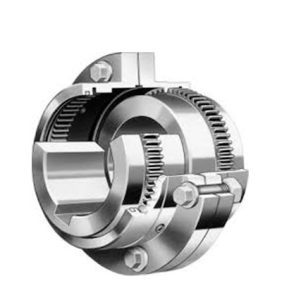
The first coupling we’ll discuss is the Falk gear-type coupling which was used traditionally by Vincent for many years. It is ideally suited for heavy-duty applications in our high-torque machinery. When used in Vincent presses, it requires a pillow block bearing, so it has been used less frequently in recent years. The power transmission between shafts uses keys. A strong advantage of this coupling is that it allows some misalignment, up to ±3 degrees of angular misalignment and up to 0.75 mm parallel, depending on the size. Another advantage is that it can be aligned solely using a straight-edge and feeler gauges in the gap between shafts, without the need for more sophisticated tools such as laser alignment. A key feature is that shaft separation is incorporated, eliminating the possibility of transmitting thrust load onto the gearbox bearings.
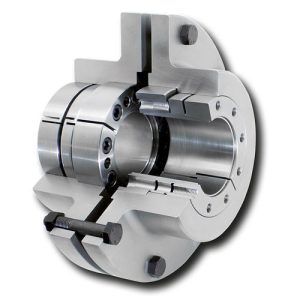
Next, we have the Flanged Rigid Coupling, mostly used in larger presses. An advantage of the FRC is that it eliminates the need for a pillow block bearing. Also, on presses with hollow bore gear boxes, such as KP-16L’s in highly abrasive applications, it facilitates the screw removal process. Its simple design can lead to reduced costs; however, the absence of a pillow block bearing eliminates the possibility of using planetary or cycloidal gearboxes. Using the rigid design necessitates specification of heavy duty bearings on the gearbox output shaft.
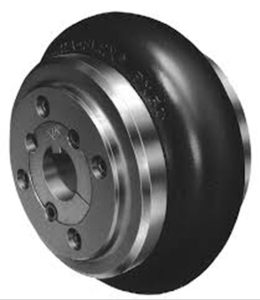
The Paraflex Tire-Type Coupling is ideal for applications experiencing misalignment and shock loading. Alignment is less critical than with rigid couplings, as it accommodates angular and parallel misalignment. It features excellent shock absorption properties, which improves equipment lifespan. However, due to the higher alignment tolerance, the rubber tire component can wear out over time, and it is limited to specific torque applications. The cost is moderate, providing a good balance of performance and longevity. The Dodge Paraflex coupling is used exclusively in Vincent shredders.
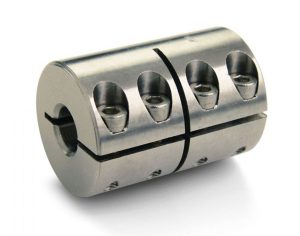
Cylindrical Rigid Couplings are effective for direct rigid connections. The coupling requires double the length of the shaft diameter; therefore, we don’t use it as often because it would require a greater press length. Alignment is critical; they must be perfectly aligned to avoid stress on the shafts. Nonetheless, their simple, robust design makes them suitable for high-torque transmission. The cost is lower due to their straightforward design. There is a risk of damage from the transmission of axial thrust loads to the gearbox bearings.
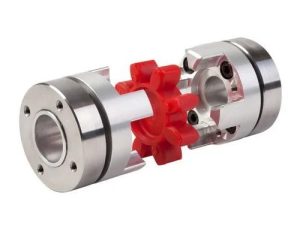
The spider coupling is used to connect a motor to most of our Nord gearboxes. The coupling consists of two metal hubs with interlocking jaws and a flexible elastomeric element, referred to as the spider or daisy wheel, positioned between them. The design allows for efficient torque transmission while accommodating slight misalignments and dampening vibrations. This makes it ideal for applications where precise alignment between the motor and gearbox is challenging or where shock absorption is essential. The elastomeric spider also helps reduce noise and wear by cushioning the connection, leading to a longer lifespan for the connected components.
Understanding the various shaft couplings is vital for optimizing our machinery’s performance and ensuring operational reliability. Each coupling type serves a specific purpose and has unique characteristics. By continually assessing and selecting the appropriate couplings, we enhance our efficiency and adapt to evolving production needs.
ISSUE #364