December 20, 2002
Cooking Oil Recovery from Fryer Crumb Using Screw Presses
After years of inconclusive efforts, activities with cooking oil have come into focus.
Several times, we have received 5-gallon pails of crumb that had been filtered from used cooking oil. We dutifully ran it through a screw press, making a video that showed dirty oil, with powdered crumb, being separated. Frequently the press jammed. The restaurant that sent the sample invariably saw the results, contemplated the five-figure price tag for a Model CP-4 lab press, and dropped the project.
Improving Press Performance with Higher Torque and Lower Speed
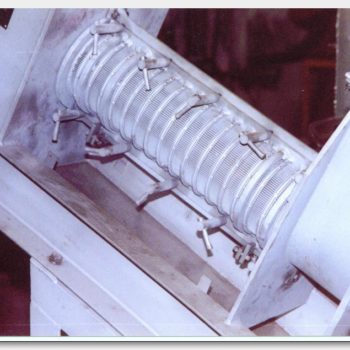
Two years ago a firm that produces fried potatoes and onion rings rented a CP-4 screw press. They feed it crumb that falls off the cooked product as it leaves a Heat and Control cooker. When the press jammed, we swapped out the drive for one with more horsepower and lower speed.
Reducing Waste Disposal Costs and Improving Safety
The result was a tiny, steady stream of cooking oil, amounting to 60% by weight of the material fed into the press. This oil was kept out of the crumb-cake going into the dumpster. The plant people loved this because it eliminated a messy waste disposal problem. Management loved it because it recovered about eighty pounds of oil, at $0.40 a pound, per hour.
Another benefit mentioned by customers was fire prevention. Both had experienced dumpster fires caused by spontaneous combustion in the crumb material. Pressing out the oil has solved the problem.
Managing Quality and Color
Quality of the oil is important. For example, the recovered oil in one case was found to have 2.9% free fatty acids, which was the same as from the fryer. Another concern is off-color specs: these were found only when over-cooking was resulting in specs throughout the fryer.
The client purchased two CP-4 presses. This was done to avoid cross-contamination of oils (and food allergens) between cookers.
Case Study: Simplot French Fries Factory
Another test at a Simplot French fries factory was an even greater technical success. They, too, rented a CP-4 screw press. At the plant, the cooking oil was filtered in a draped paper filter machine. The solids filtered out were 40% oil by weight. When the paper sheet, with oil and crumb, was fed into the press, the paper wrapped around the screw and jammed the press. Therefore it was necessary to shred the paper before putting it in the press.
The consequences were excellent: the shredded paper acted as a press aid, and fairly clear oil was separated as press liquor. This oil, containing up to 15% solids mud, was fed back to the paper filter and the fryer. Unfortunately, commercial success was elusive as the plant was shut down.